

Cart
0
It is late afternoon, and you have managed to relax, having a busy day. You make yourself a cup of coffee and look at your dog who is lying next to the door. However, in a few minutes, they are standing and nosing around, kicking a shoe, digging at the couch and chewing up whatever they can get. This scene may seem familiar to you in the event you have been around dogs. Dogs are born to chew and when the right channel is not provided they chew everything in your house, making it a chew toy.
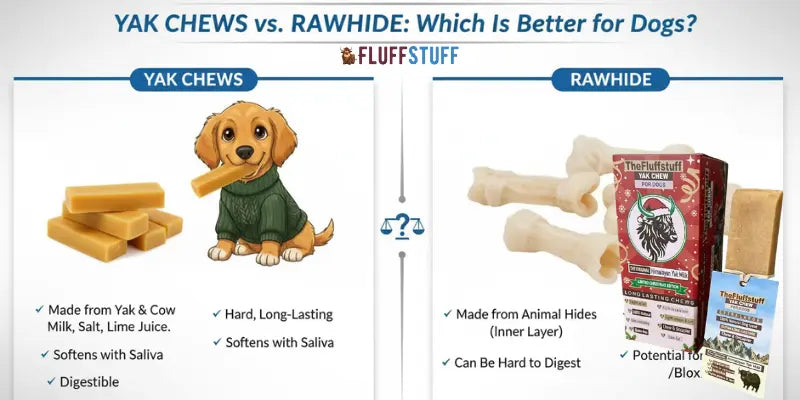
Being good owners of dogs, we all tend to question ourselves on which chew to give our dogs. The old time rawhide chews have been a longtime favorite over the decades, however, Yak Chews have become extremely popular in the recent past. Today, we will deconstruct the differences, benefits, and risks in order to allow you to choose which one is indeed superior to the best of your dog.
Why Dogs Need Chews
It is necessary to know why dogs chew before we compare Yak Chews and rawhide. Chewing is instinctive. Puppies use their mouths to investigate the world, teething dogs should have some relief, and adult dogs should be able to chew to relieve all the energy and anxiety, and maintain a strong jaw. Lack of the right chew can easily make the dogs resort to furniture, shoes or any other household objects.
It is not only the question of entertainment to give a dog chew properly, but it helps stimulate the brain, relieve stress, and even clean teeth. It is therefore important to select a good chew to have a happy and healthy dog.
What Are Yak Chews?
The Yak Chews are natural dog chews of milk (usually yak milk) prepared using a centuries old Himalayan recipe. The milk is heated, solidified, thickened and dried gradually. It is a process that takes the majority of the moisture away, leaving the end result a chew that is long lasting and firm.
Another name of the Himalayan Yak milk chews is natural dense. They do not allow dogs to bite quickly hence they will have to chew slowly and their jaws will be involved longer. It is also known by many owners as yak milk cheese bones which are all natural, with no preservatives or any other unnatural flavorings.
What Is Rawhide?
The inner part of cow or horse hides is used to make the rawhide chews. They are cooked, washed, and occasionally spiced and are being sold as dog treats. Rawhide has also been popular since it can be molded to various sizes and is not that costly when compared to speciality chews.
There is no such thing as rawhide without dangers, however. In case unattended, dogs can end up swallowing large pieces and this may result in either choking or intestinal obstruction. Moreover, not all rawhide products do not undergo some form of chemical treatment during manufacturing, and this may be upsetting to sensitive stomachs.
Durability and Longevity
Durability is one of the key reasons why Yak Chews are more preferable to rawhide. Chews made of soft rawhide may be swallowed within minutes, particularly by chewers of tremendous power. Contrary to this a Yak Chew demands slow grinds of the treat by dogs. This prolongs it to a great extent keeping dogs busy and happy.
In case dogs are easily bored or chew destructively, Yak Chews will ensure that they have a longer time spent, hence less stress and fewer damage to household properties. Dogs Multipacks such as dog yak bones multipack make sure that you will never be short of an extra chew, so they can easily suit the multi-dog family.
Safety Considerations
Safety is a critical factor when choosing a chew. Rawhide has a few safety concerns:
● Dogs may swallow large pieces, leading to choking or digestive blockage.
● Some rawhide chews are chemically treated, which may upset sensitive dogs’ stomachs.
● They can splinter, creating sharp edges that may harm teeth or gums.
Yak Chews on the contrary are natural, hard, and are digested better when chewed well. Nonetheless, it is significant to supervise. Owners are to take away small pieces and have fresh water somewhere around. The concern of the appropriate size of the yak milk bone will also minimize risks particularly among the heavy chewers.
Dental Benefits
Chewing is a natural way of reducing the formation of plaque and tartar. The same can be said of both rawhide and Yak Chews, only there is a difference:
Rawhide may erode teeth too fast in case a dog is excessively violent, and bits of it may irritate the gums.
Yak milk chews are also durable and there is no splintering when a dog gets chewing as they do at their own pace. Friction is known to clean teeth lightly and the more saliva produced serves to wash the remain food particles.
Yak Chews are another dental chew suggested by many veterinarians and are a safer option to dogs with the tendency to chew hard.
Nutritional Value
The main ingredient of the Yak Chews is milk so they are a natural source of protein and contain such minerals as calcium. They are also devoid of additives, and this is best suited to sensitive-stomach dogs.
On the other hand, Rawhide is very low in nutritional value. Although flavored rawhide can attract dogs, it is not associated with the extra health benefits.
Practical Advice for Dog Owners
When deciding between Yak Chews and rawhide:
● Assess your dog’s chewing style: Heavy chewers may prefer tougher Yak Chews. Dogs who chew gently might do fine with rawhide, but supervision is still important.
● Size matters: Always select the chew according to your dog’s size. Small chews for small dogs, large chews for large dogs.
● Multipacks are convenient: Yak bones for dogs multipack ensures you always have a fresh chew ready.
● Monitor chewing sessions: Never leave a dog unattended with a new chew. Remove small pieces to avoid choking.
By taking these precautions, you can provide a safe and enjoyable chewing experience that meets your dog’s instinctive needs.
Why Yak Chews Often Win
While rawhide may still be a convenient choice, Yak Chews often come out ahead for several reasons:
● Long-lasting: Keeps dogs engaged longer, reducing boredom and destructive behavior.
● Natural and chemical-free: Safer for sensitive dogs and easier to digest.
● Dental support: Gently cleans teeth and reduces plaque buildup.
● Mental engagement: Encourages focused chewing, calming anxious or energetic dogs.
For most owners, Yak Chews offer better overall benefits, combining safety, durability, and natural health advantages.
Safety Tips for Yak Chews
Even with natural chews, supervision is essential:
● Remove chews when they become very small.
● Store chews in a dry, cool place to maintain their firmness.
● Provide fresh water nearby.
● Introduce Yak Chews gradually, especially for puppies or sensitive dogs.
These simple steps ensure your dog enjoys their chew safely and happily.
You can also check: How Long Do Yak Milk Bones Last? A Realistic Guide
Conclusion
Chewing is an instinct of dogs as it is a vital behavior to their mental and physical health. Although one of the long time alternatives has been rawhide, it has some dangers that Yak Chews do not possess. Whether it is the Himalayan Yak chews with their natural texture or yak milk cheese bones with its beneficial nutrients and higher level of longevity, these products provide longer indulgence, better oral health, and relaxed activity of any size dog.
Dog owners who would prefer a healthier, less aggressive and safer alternative would choose Yak Chews. They can play an important positive role in the life and daily life of your dog when it is used responsibly and under controlled conditions.


